A scenario-based eLearning experience designed to help front desk employees navigate high pressure moments with clarity.
Experience Project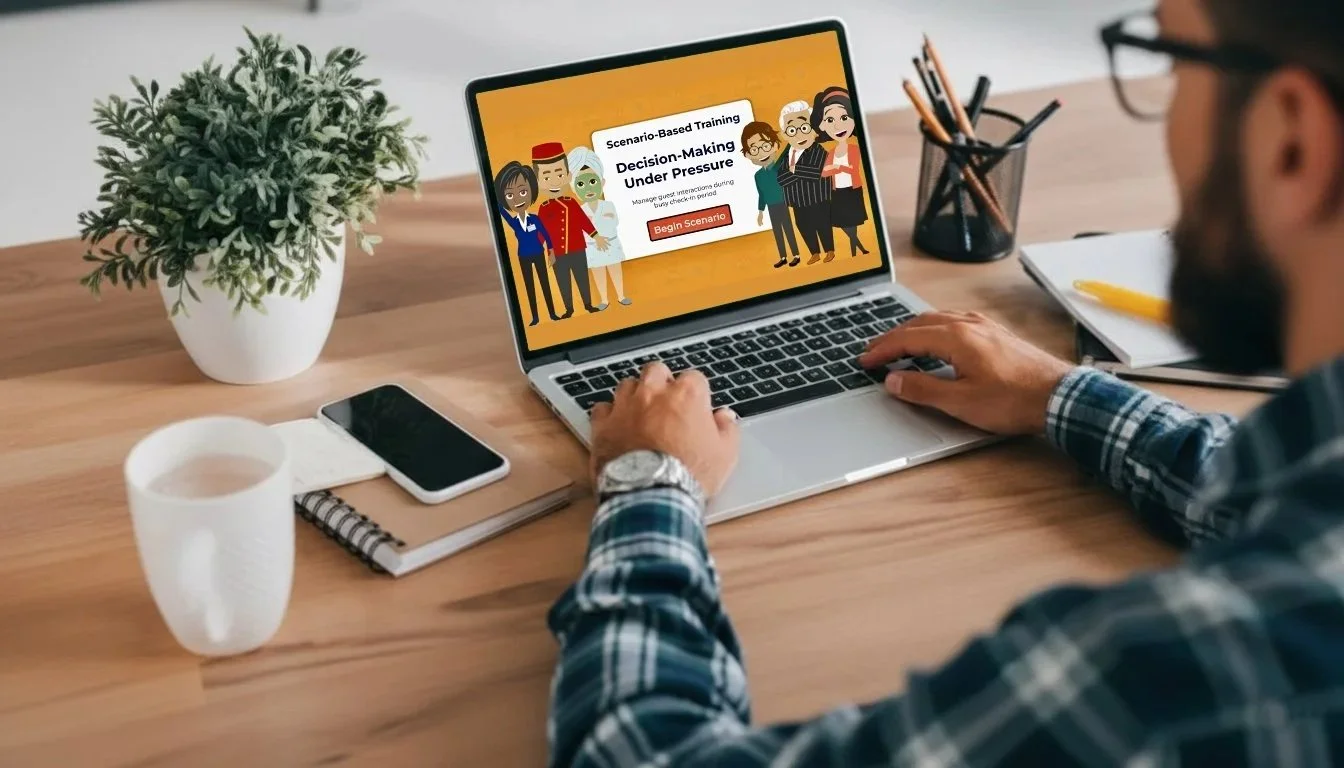
OVERVIEW
A quick snapshot of what this project is about
The Waffle Hotel (a fictitious hotel chain) noticed that during peak hours, front desk employees often struggled with decision-making under pressure. These moments frequently resulted in guest frustrations, escalating complaints, and an increasing number of negative reviews. Over time, this led to the hotel gaining an external nickname: “The Awful Hotel.”
To address this problem, I proposed a scenario-based eLearning concept that places employees in a realistic, high-volume lobby environment where multiple guest issues unfold at once. Learners must quickly assess each situation, determine priorities, and choose how to respond as guest emotions and time pressure increases.
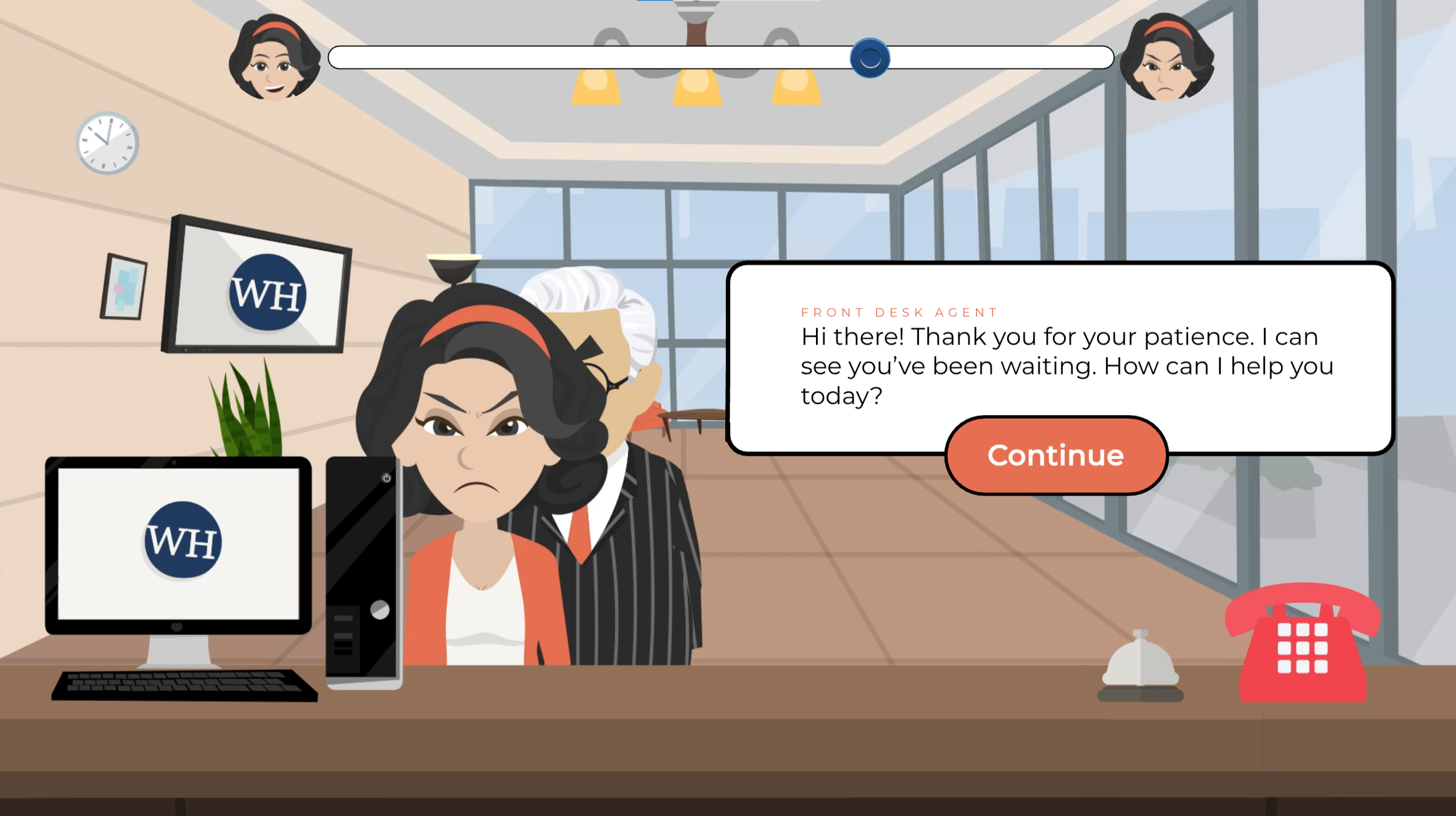
To support this goal, the experience includes a gamified anger meter that visually tracks guest emotions throughout the scenario. The end of the scenario concludes with a customer satisfaction summary inspired by real hotel review platforms, helping learners understand how their decisions translate into real world feedback.
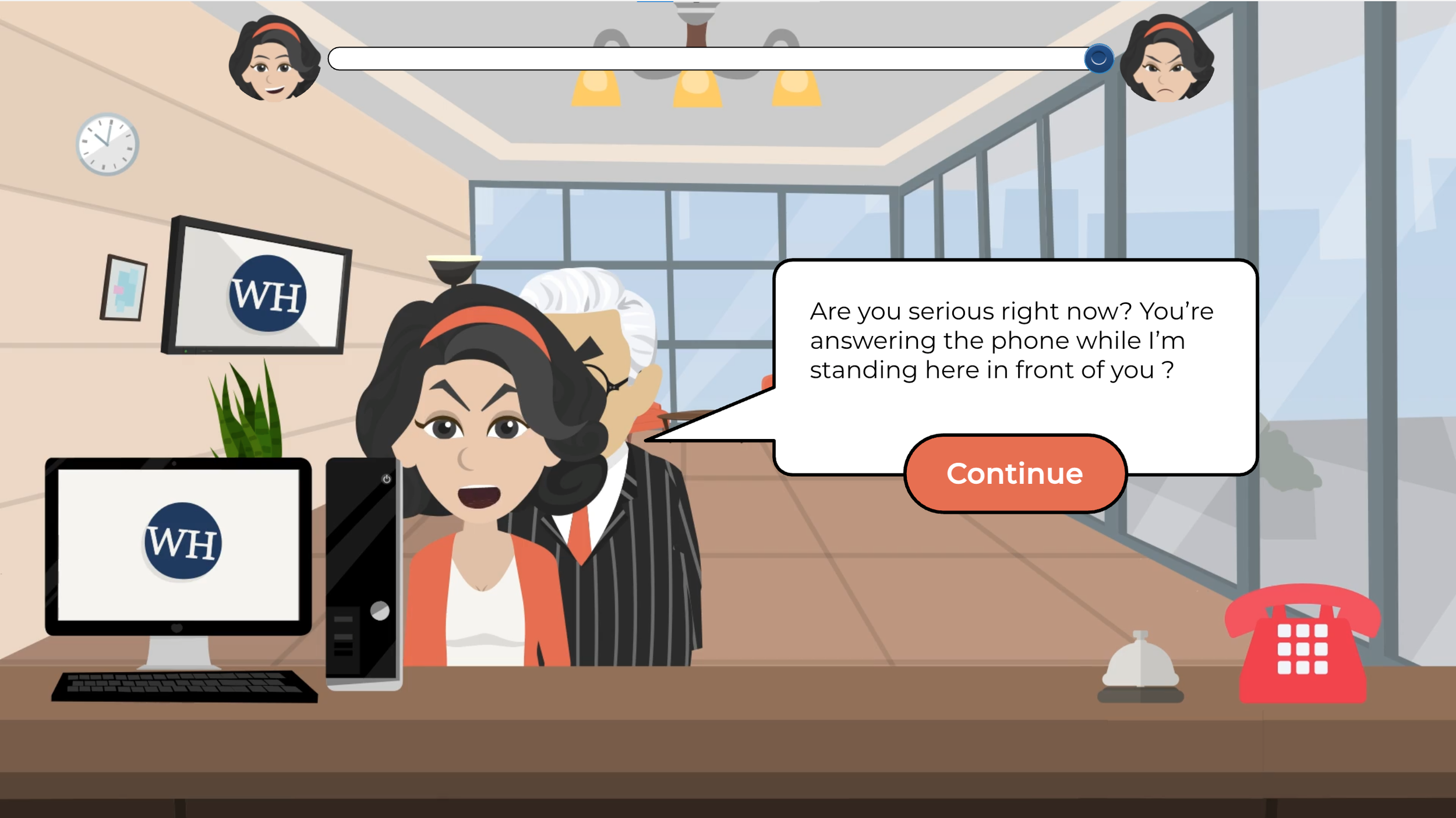

Existing training focused primarily on policies, procedures, and customer service standards, but offered little to no opportunities for employees to practice applying those guidelines in realistic, high-stress scenarios. As a result, employees understood what they were supposed to do, but struggled with when and how to apply that knowledge during peak moments.
Designing an eLearning experience that drops learners into a high-volume hotel lobby with multiple guest conflicts, where learners get to practice decisions without real consequences.
Problem
Solution
MY PROCESS
How I approached this project from start to finish
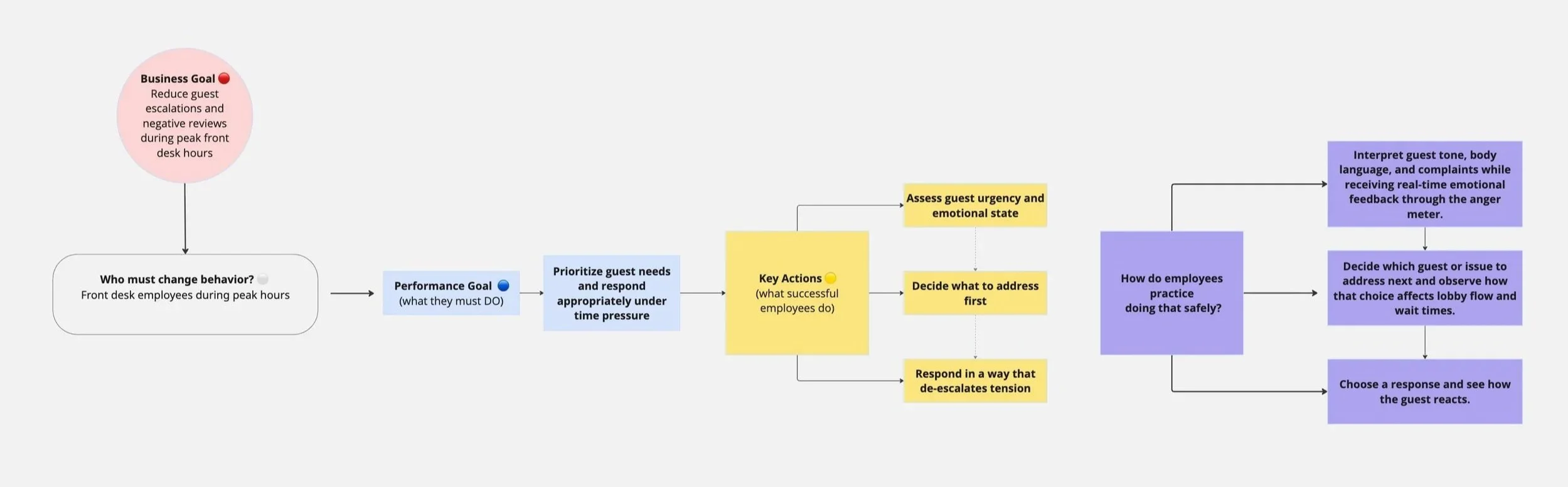
Rather than designing content around policies, I began by identifying the critical moments where front desk decisions most often lead to guest escalation. Using action mapping, I focused on what employees must do differently during peak hours such as prioritizing guest needs, choosing when to intervene, and deciding how to respond when emotions run high.
Here's how I built it, step by step.
ACTION MAPPING
Connecting business goals to real employee behaviors
I consulted a hotel front desk manager as my subject matter expert (SME) to develop the action map and set the overall goal for this project. We identified the key actions employees need to take during peak hours to de-escalate interactions and reduce complaints.
STORYBOARD
The written script of the entire experience
After completing the action map, I created a text-based storyboard that turned those actions into a scenario. Each decision point was intentionally designed to reflect the real decisions a front desk employee faces during a rush.
I framed the scenario as a high volume lobby where multiple guest issues unfold at the same time. I continued working with the subject matter expert (SME) to ensure the interactions, guest behaviors, and employee responses felt realistic and aligned with actual front desk experiences.
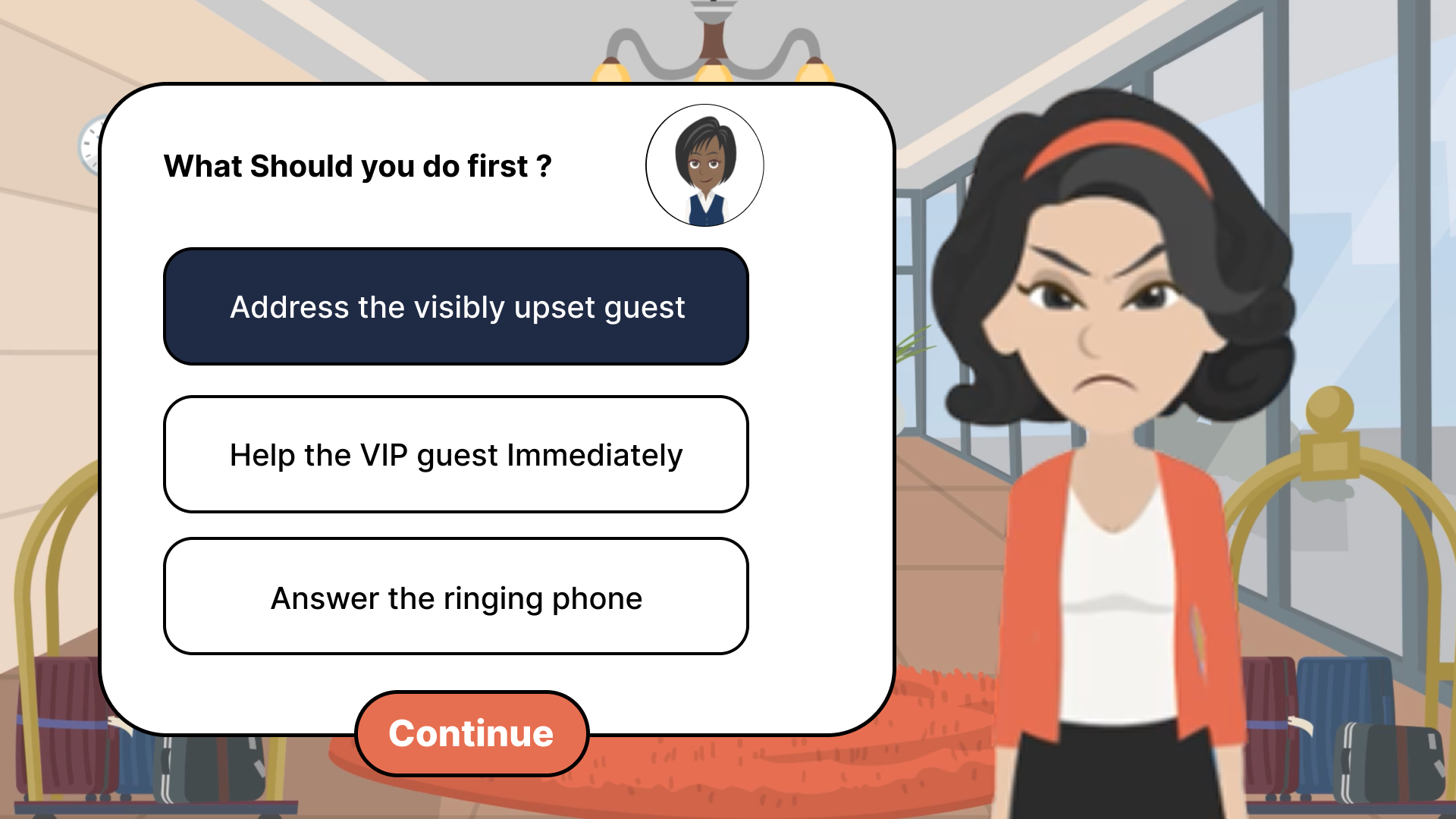
While there are many situations that can escalate at the front desk, I chose to focus on long wait times, room-related complaints, and competing guest demands, as these are among the most common triggers for guest frustration. As learners progress through the scenario, they are presented with decision prompts that include correct responses as well as realistic distractors that reflect common mistakes made under pressure.


VISUAL MOCKUPS
Static designs built in Figma before development
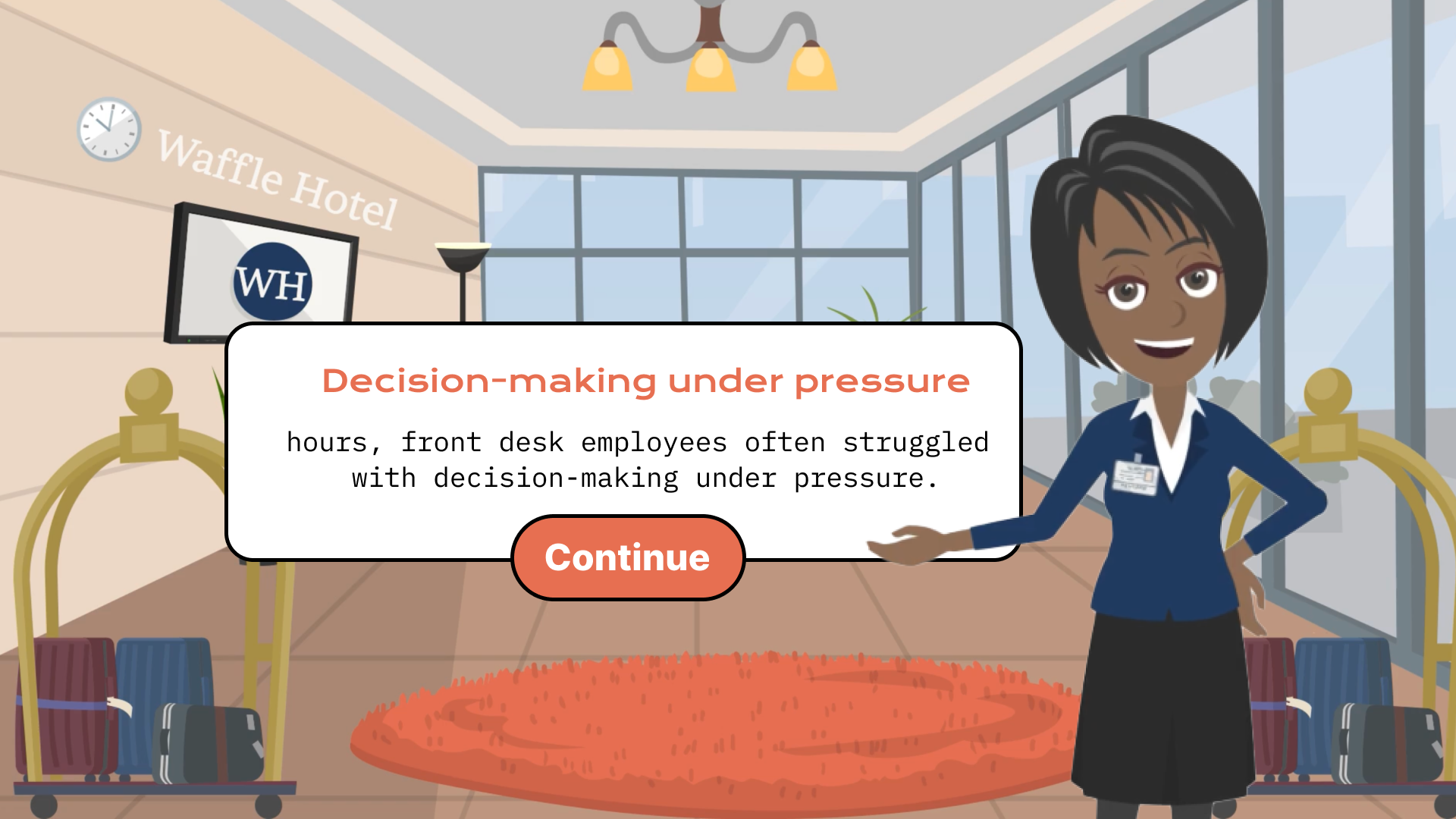
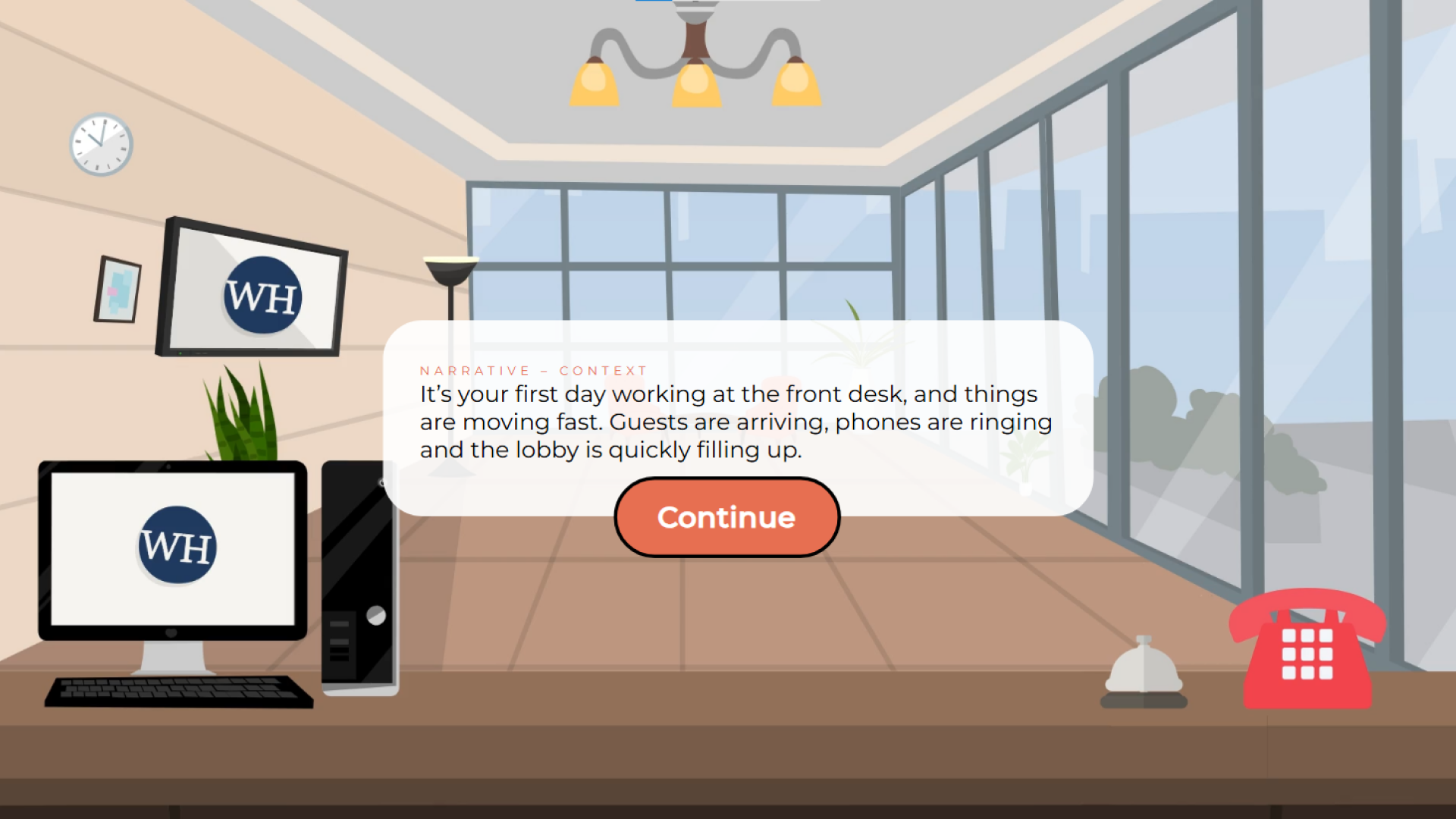
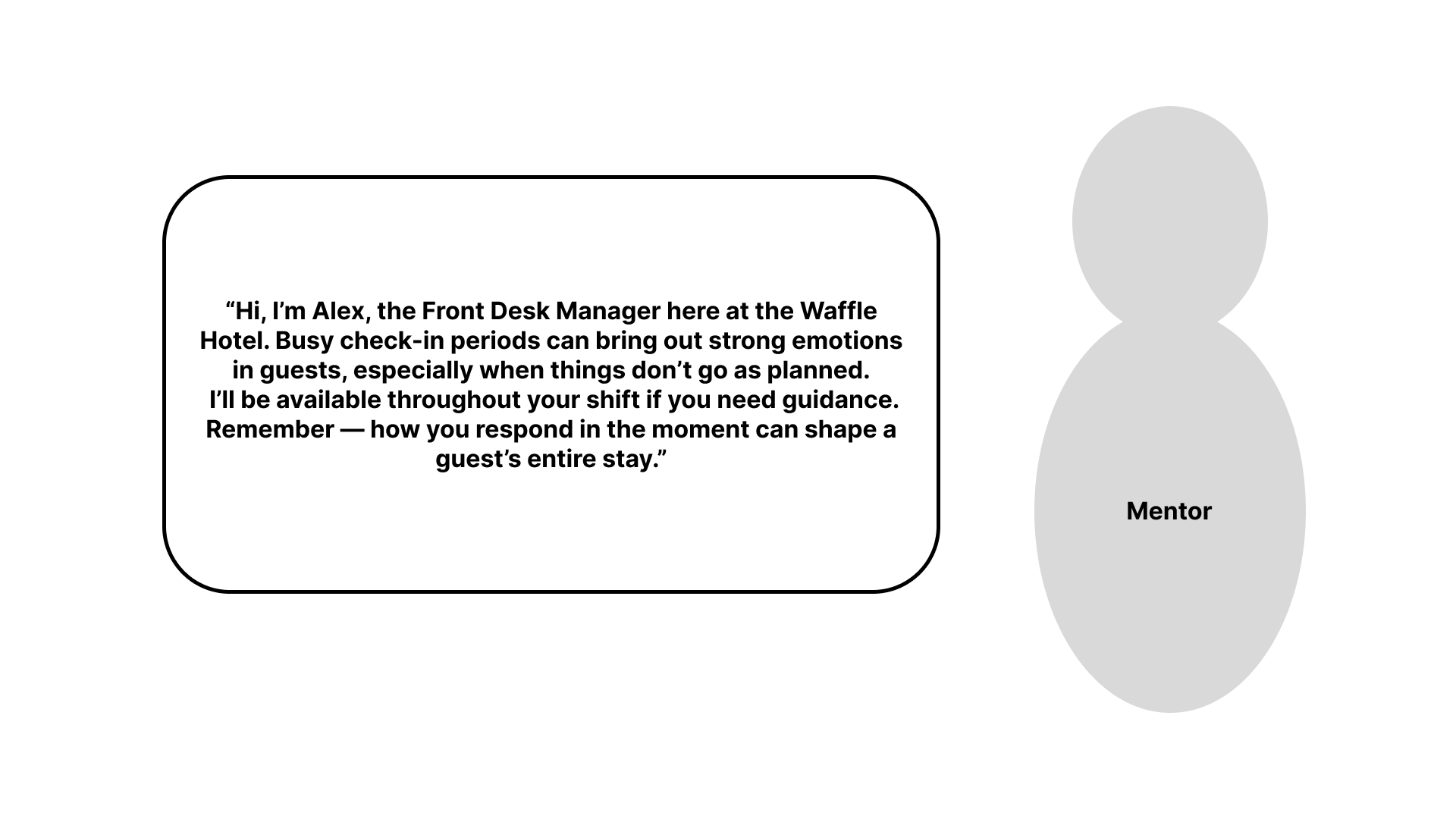
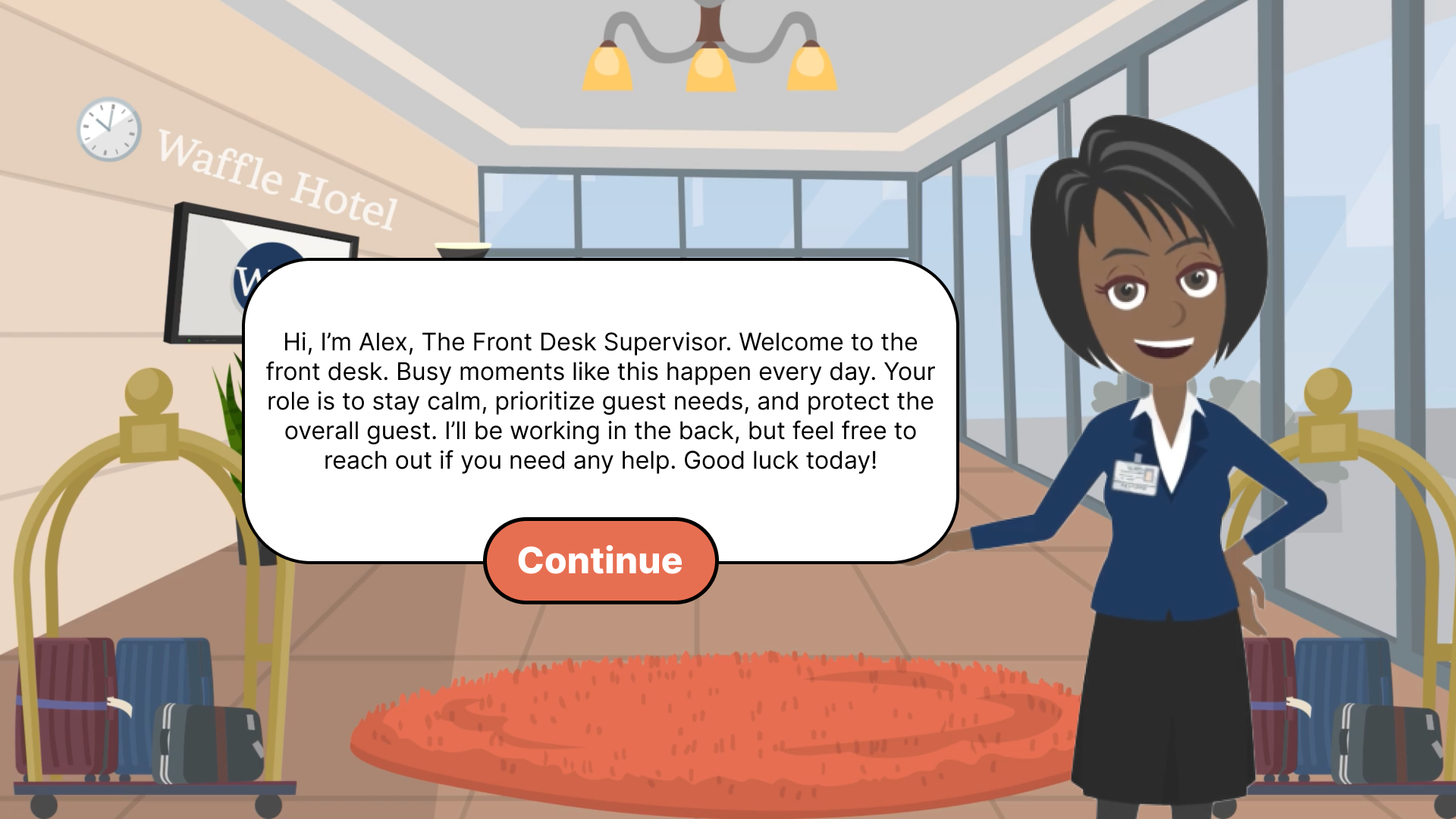
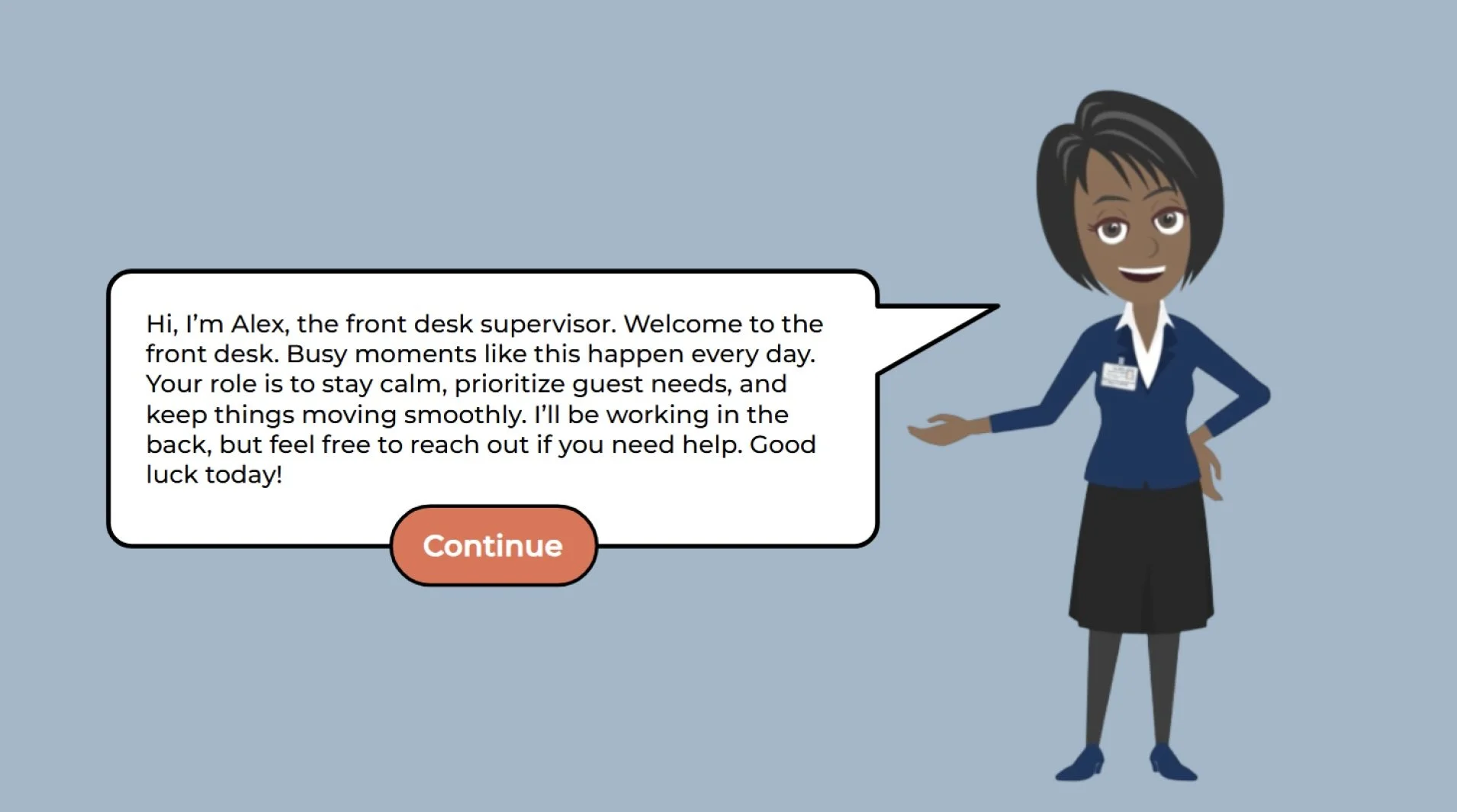
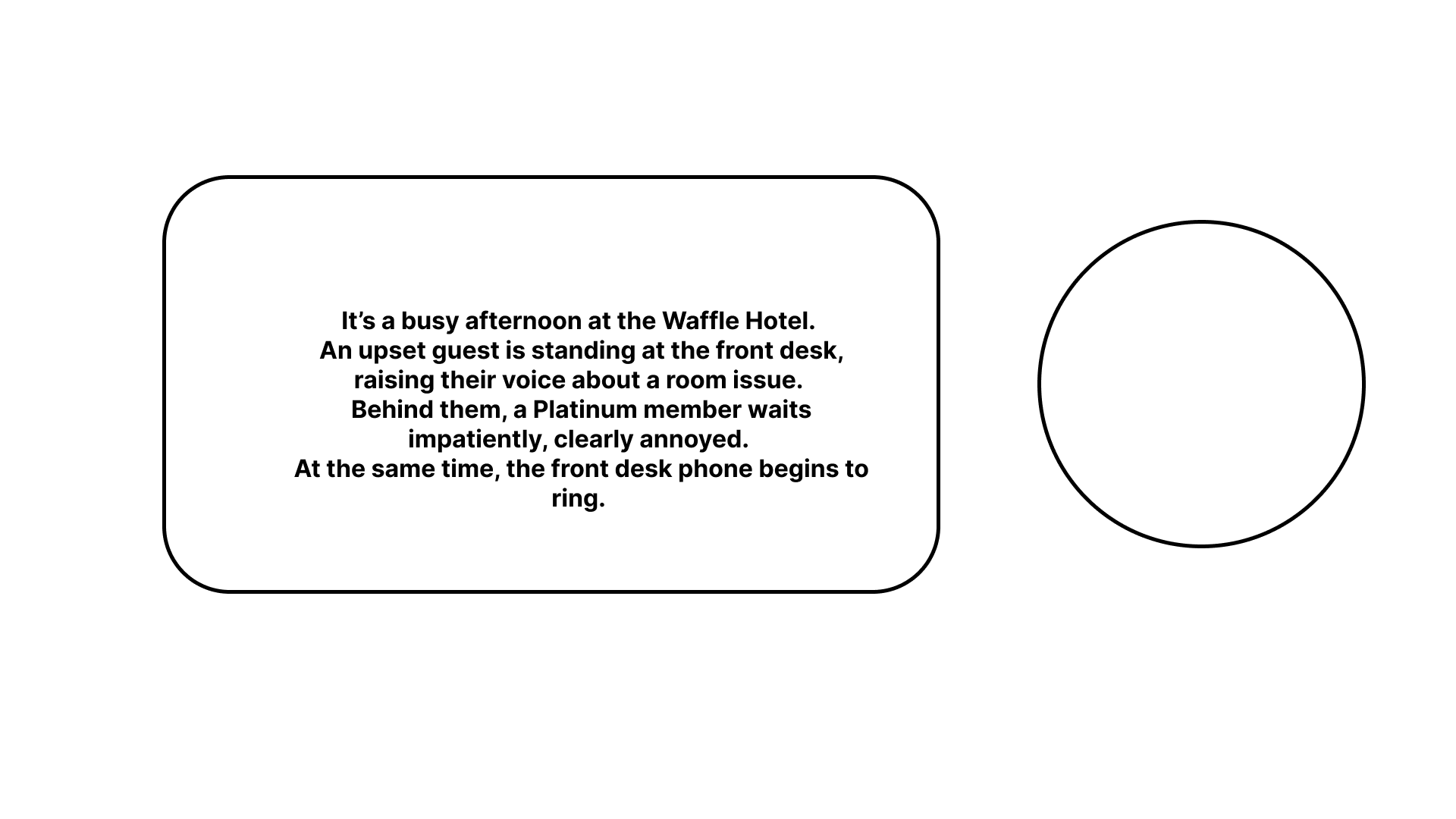
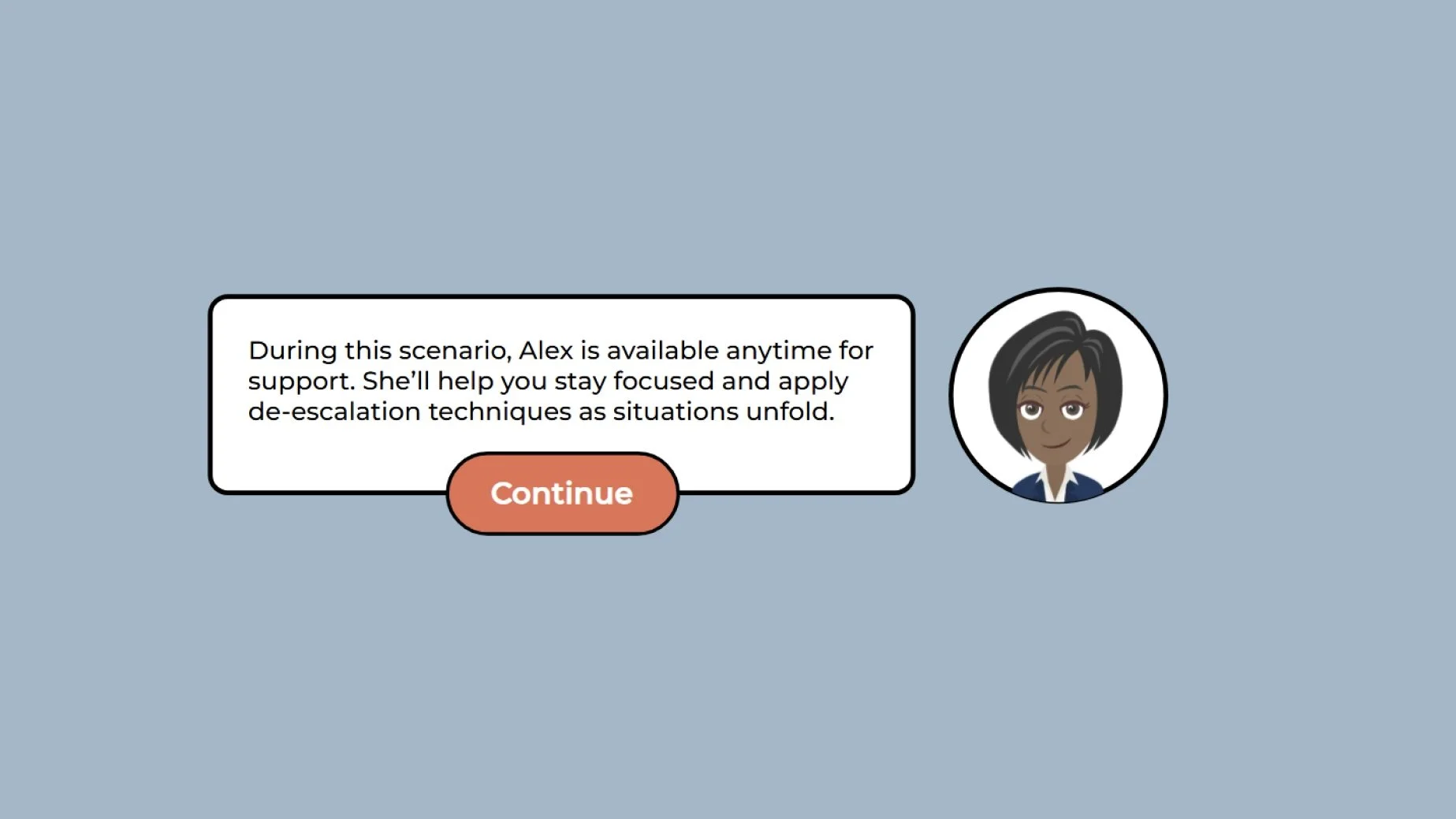
After the text-based storyboard was finalized, I moved into designing visual mockups in Figma. I focused on maintaining a consistent visual style across all screens, including backgrounds, character placement, and caption containers. To reinforce this, I built a small, intentional color scheme using Adobe Color and carried those colors throughout the entire project.
Once the mockups were complete, I organized them into a visual storyboard that mapped each screen to the correct outcome. This made it easy to validate flow, confirm learning intent, and ensure the visuals supported the scenario logic before rebuilding everything in Articulate Storyline 360.










PROTOTYPE
A working version where decisions trigger consequences
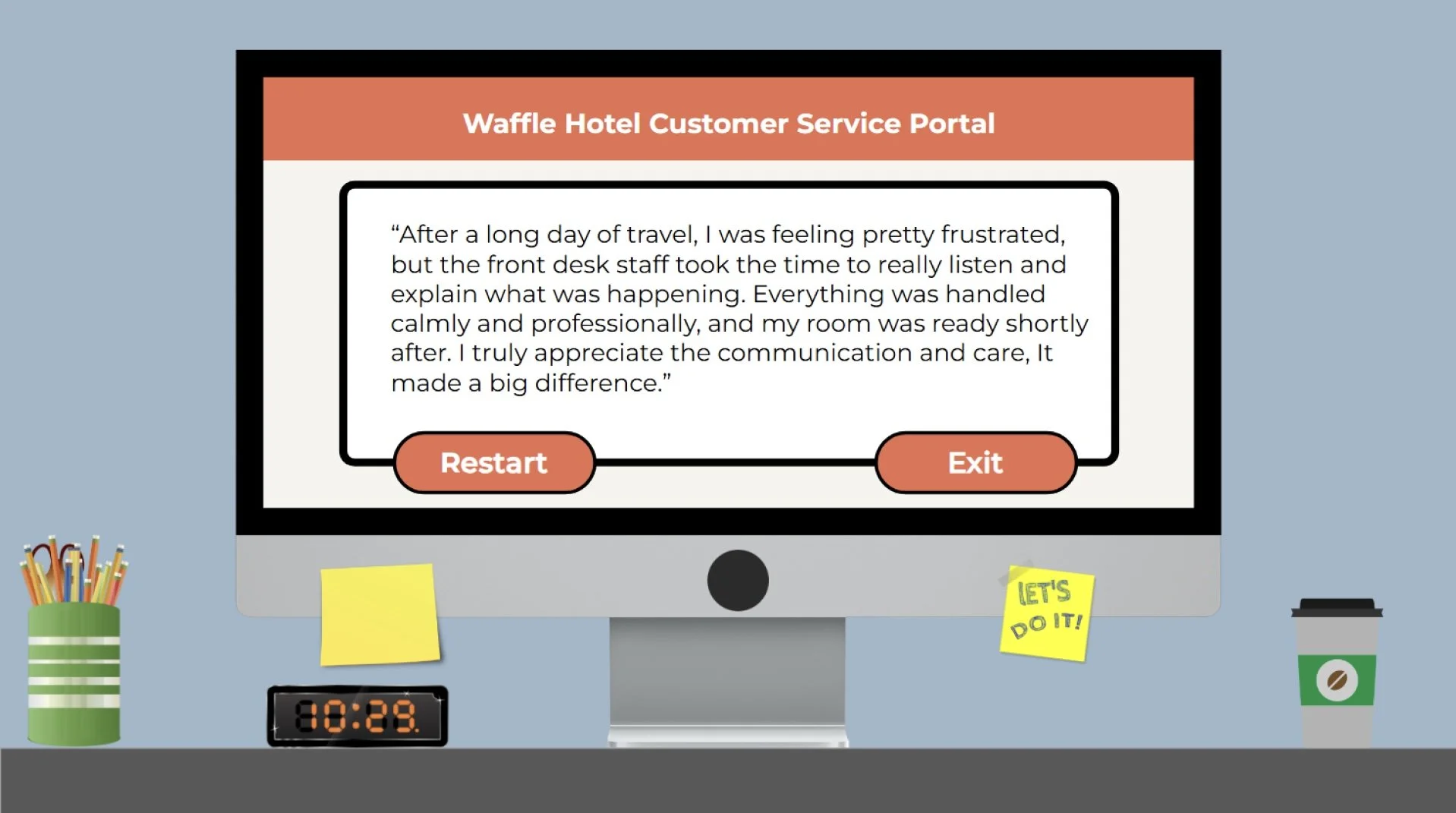
Once the visual storyboard was finalized, I rebuilt the experience as an interactive prototype in Articulate Storyline 360, turning the static screens into a fully interactive scenario where learner decisions directly shape how the situation unfolds.
At each decision point, learners are presented with multiple response options, including an effective choice and realistic distractors that reflect common mistakes made under pressure. Depending on the learner’s selection, the scenario either stabilizes or escalates, with immediate consequences such as increased guest frustration or negative outcomes.
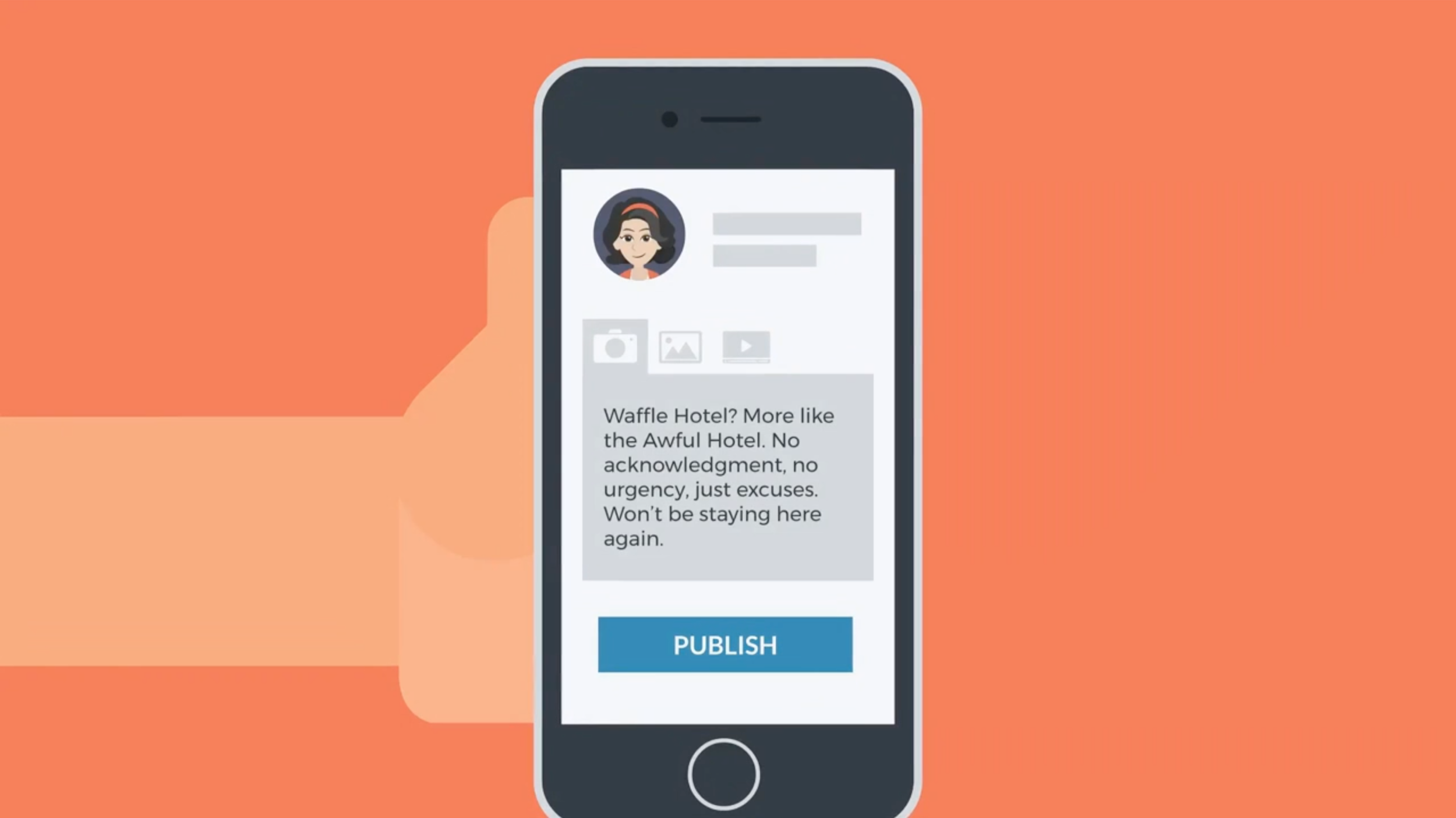
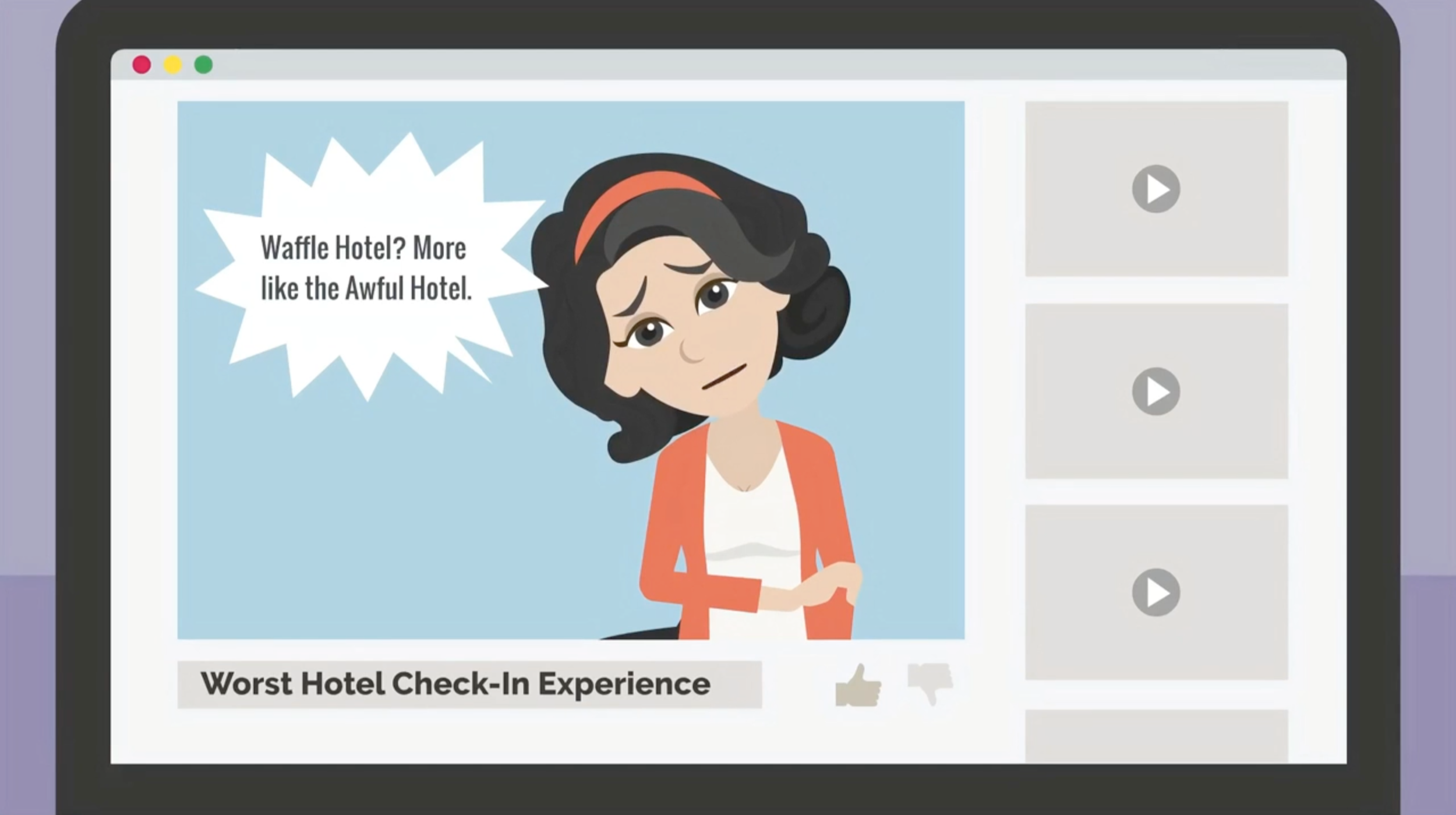
To highlight unfavourable decisions, sometimes choosing the incorrect path triggers a public backlash, ranging from viral social media complaints to “story time” Youtube videos.
By prototyping the scenario , I was able to test pacing, feedback timing, and the clarity of each decision before finalizing the experience. This ensured the interaction felt intuitive, realistic, and aligned with the goal of helping front desk employees manage guest interactions effectively during peak moments.
FULL DEVELOPMENT
The fully built, polished final experience
The full development was extremely manageable, because of the guidance of each of the previous section blocks.
Results & Takeaways
This project helped me understand the difference between teaching policies and procedures, versus designing training that prepares employees to respond in real, high pressure situations.
Key Takeaways
Small mistakes can quickly escalate.
Realistic choices are important to implement.
Decisions should feel genuinely difficult.
Working with a Subject Matter Expert (SME) was valuable.
What I Would Improve
Involve real front desk employees earlier in usability testing.
Overall Reflection
This project strengthened my ability to design scenario-based learning that mirrors real workplace challenges.
The most meaningful learning happens when there isn’t an obvious right answer and learners must think through it.